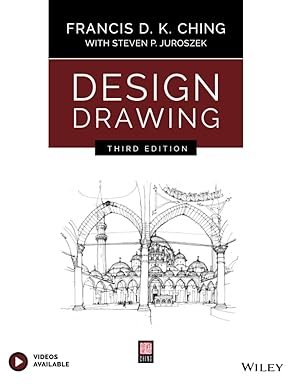
Design Drawing, Third Edition – Mastering Hand and Digital Drawing for Architects and Designers
Design Drawing, Third Edition by Francis D.K. Ching is the definitive guide to both traditional hand drawing and modern digital-drawing techniques, offering architects, designers, and visual artists a comprehensive resource for mastering the art and craft of drawing. Recognized globally for his clarity, precision, and visual storytelling, Ching brings decades of expertise to this fully updated edition, making it essential for students, professionals, and educators in the visual design fields.
This third edition integrates the rich legacy of hand drawing with the latest digital workflows, hybrid drawing methods, and online video tutorials, providing a complete, contemporary approach to the drawing process. By combining traditional and digital techniques, readers can explore the strengths of each medium while learning how to communicate design ideas with clarity, precision, and impact.
The book covers fundamental drawing concepts, including line quality, tone, shape, perspective, multiview projection, and paraline drawing. Ching’s approach emphasizes understanding the principles behind each technique, ensuring that learners not only execute visually accurate drawings but also develop a strong conceptual foundation that informs their design thinking. The integration of over 1,500 hand-drawn illustrations demonstrates every technique in detail, guiding readers step by step through the drawing process from initial sketches to polished digital models.
A key feature of this edition is its focus on practical skill development and visual communication. Exercises and examples provide hands-on opportunities to practice each technique, helping learners build professional-grade drawing skills that can be applied in studio work, presentations, and collaborative design projects. By teaching how to transition seamlessly between hand and digital media, the book prepares students and professionals to adapt to evolving design tools and industry practices.
Ching also addresses the integration of hybrid drawing techniques, showing how hand sketches can be combined with digital tools to enhance presentation, clarity, and efficiency. Online resources, including video tutorials, further enrich the learning experience, providing visual demonstrations that complement the book’s illustrations and exercises. This multi-modal approach ensures that learners of all levels can follow along and develop confidence in both traditional and contemporary drawing methods.
Whether you are a student seeking to strengthen foundational skills, a designer refining your professional drawing abilities, or an educator teaching visual communication, Design Drawing, Third Edition offers a comprehensive, accessible, and visually engaging roadmap. Its combination of clear instruction, detailed illustrations, practical exercises, and digital integration makes it an indispensable resource for mastering the full drawing process from sketch to digital model.
In summary, this edition of Design Drawing equips readers with the tools, knowledge, and confidence to communicate ideas visually with accuracy and creativity. It remains an essential reference for anyone serious about pursuing excellence in architectural, design, and artistic drawing, bridging the gap between traditional techniques and modern digital workflows.






























If you’re familiar with Ching’s basic architectural drawing texts this volume continues to illustrate the methods and science for successful architectural rendering. It’s not for beginners, but complements his basic texts for the advanced student.